Article: How to Build a Home That Works With Your Biology
How to Build a Home That Works With Your Biology
The concept of a healthy home usually means clean air, non-toxic materials, good ventilation. Those things matter.
But there's a layer beneath all of them that almost nobody talks about: whether your home is biologically aligned with the people living in it.
For most of human history, homes were simple extensions of the natural environment. They sheltered us from weather while still exposing us to natural light cycles, temperature shifts, and the Earth's electromagnetic field. The biology that governs our sleep, energy, hormones, and recovery evolved inside those conditions.
Modern homes do the opposite. They create an artificial environment — constant temperature, constant artificial light, electrical systems running day and night — that is deeply mismatched with the signals the human body needs to function well.
The good news: you can change this, mostly for free, starting today.
The Concept of a Circadian Home
A circadian home is one where the environment changes across the day — just as the natural environment does. Light shifts from bright and blue-rich in the morning to warm and dim in the evening. Temperature follows a similar arc. Activity and rest are supported by the space itself.
It's not a design trend. It's a return to the environmental conditions human biology is calibrated for.
Morning: Light That Wakes the System Up
The most important environmental signal in the morning is bright, blue-rich light — ideally natural sunlight. This triggers the cortisol awakening response, suppresses residual melatonin, and sets the master clock for the day.
Free version: Open every curtain and blind in the house as soon as you wake up. Spend the first 10–20 minutes in the brightest part of the home, or better, outside. Eat breakfast in natural light.
What to avoid: Dark interiors all morning, sunglasses worn during the first hour of daylight, and — most importantly — scrolling a phone before getting natural light into the eyes.
Midday: Supporting Focus and Energy
The body's circadian rhythm has a natural energy dip in the early afternoon — typically between 1pm and 3pm — driven by a temporary drop in core body temperature. Most people fight this with caffeine. A better approach is to work with it.
Free version: A 10–20 minute rest or nap during this window doesn't reduce night-time sleep quality if it ends by 3pm. Bright natural light in the afternoon supports the second peak of cortisol and energy that typically follows the early afternoon dip. Get outside again if possible.
Home environment: Keep working areas bright and well-lit with natural or full-spectrum light during the day. Dim, enclosed spaces reduce alertness and compound the afternoon dip.
Evening: The Transition That Most Homes Get Wrong
This is where most homes fail their occupants most significantly. The transition from day to evening light is one of the most important biological events of the 24-hour cycle, and the standard modern home does nothing to support it.
Free version: Around 6–7pm, begin shifting the home's lighting from overhead to lamps. Reduce overall brightness. Move toward warmer colour temperatures. By 8pm, overhead lighting should be off entirely in living areas.
This simple shift — which costs nothing — can produce a noticeable improvement in how naturally sleepy you feel at bedtime, often within the first few nights.
The logic: For hundreds of thousands of years, the light signal after sunset was firelight — warm, dim, flickerless. The melatonin system evolved to take this as its cue. Give it that cue, and it responds.

The Bedroom: The Most Important Room in the House
The bedroom should be engineered for one thing: sleep. Most bedrooms are not.
The principles of a sleep-optimised bedroom are well-established and almost entirely free to implement:
- Complete darkness: Cover or remove every LED indicator. Use blackout curtains or a sleep mask. Darkness signals to every cell in the body that sleep is appropriate.
- Cool temperature: Core body temperature naturally drops during sleep. A bedroom temperature of 18–20°C supports this process. Sleeping in rooms that are too warm is one of the most common and underappreciated causes of poor sleep quality.
- No screens: Not because of blue light alone — but because the bedroom should be psychologically associated only with sleep. If the brain associates the bedroom with stimulation, it will resist sleep there.
- Quiet or consistent sound: White noise or nature sounds can mask the irregular sounds that cause micro-arousals. Silence is ideal, but consistent background sound is better than intermittent noise.
Children and the Circadian Home
Children's circadian systems are even more sensitive to light disruption than adults'. Their melatonin suppression from blue light is stronger, their sleep architecture is more easily disrupted, and the consequences — behavioural dysregulation, reduced learning consolidation, growth hormone disruption — are more significant.
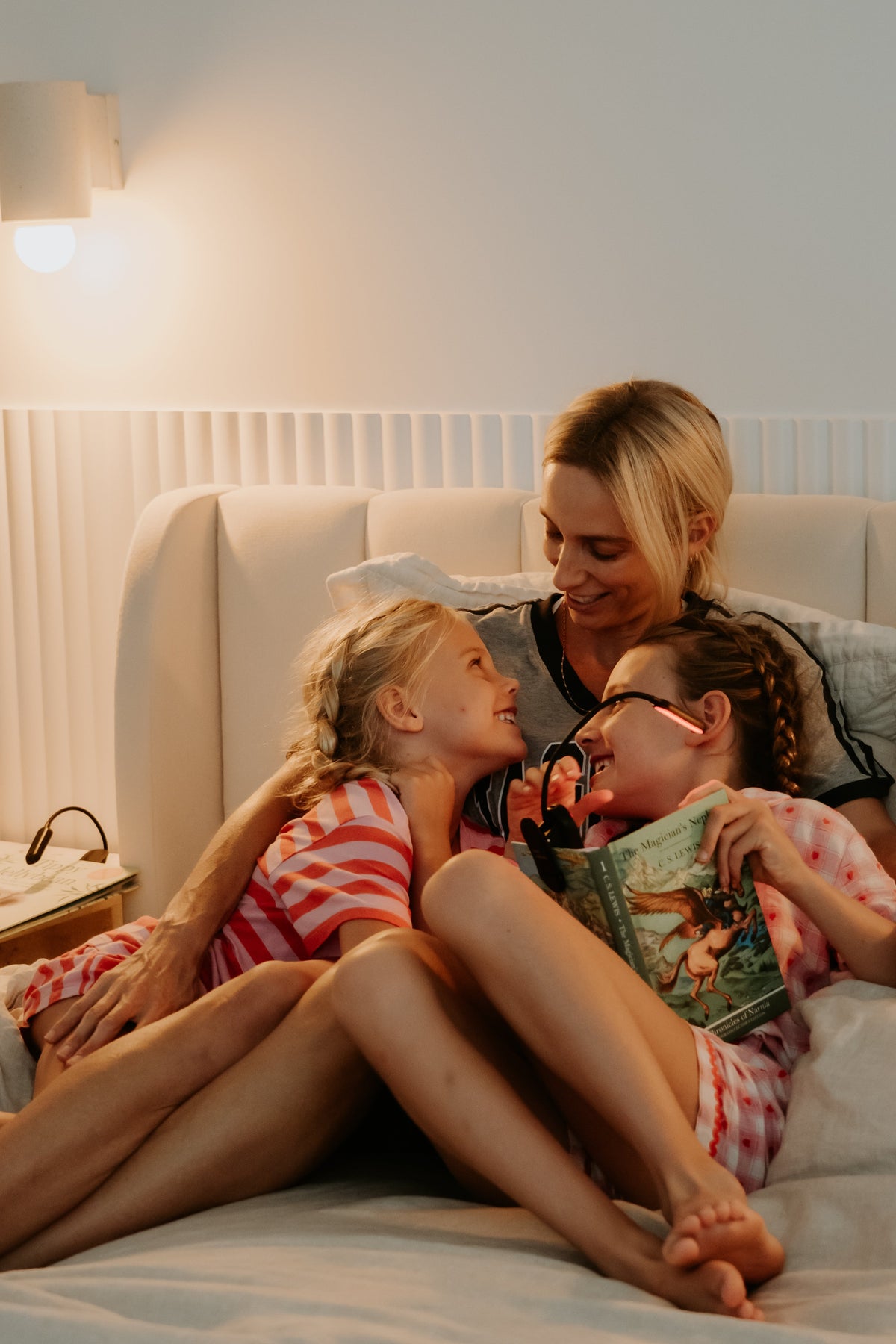
The most impactful change for children is usually the simplest: warm, dim light in the bedroom and living areas from around 6pm, and complete darkness in the bedroom during sleep. Screens out of bedrooms. A consistent wind-down routine with low stimulation for 30–60 minutes before bed.
Children who sleep well eat better, learn better, regulate their emotions better, and grow better. Sleep is the foundation — and the home environment is the foundation of sleep.
Start Here
A circadian home doesn't require a renovation. It starts with attention — noticing what your home is communicating to your body at each time of day, and making small adjustments that align those signals with your biology.
The light. The temperature. The darkness. The quiet. These are the inputs your body has relied on for the entirety of human existence. Give them to it, and it responds.
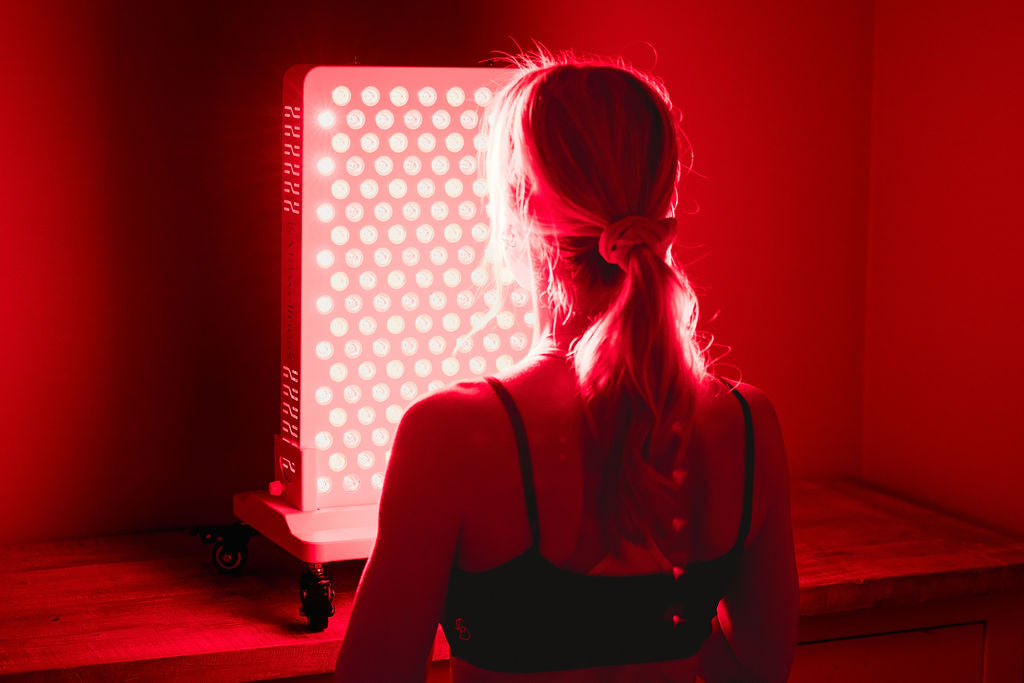
LUM8 Wellness exists to make the circadian home accessible to every Australian family. From circadian-spectrum globes that shift automatically from day to evening modes, to red light therapy panels and PEMF mats — every product we make is designed around one idea: your home should support your biology, not fight it.