Why Your Body Clock Struggles at the Change of Season (And How to Reset It for Spring)
Spring has arrived, and if you've noticed your sleep feels a bit off lately, harder to fall asleep, harder to get up, or just generally out of sync, you're not imagining it. Your body clock is built to track the changing seasons, and the shift from winter's short days to spring's longer ones is exactly the kind of change that throws it.
Most of us think of circadian rhythm as a daily cycle: wake, work, wind down, sleep, repeat. But it's also an annual one. Humans evolved under a sky that changed shape all year round, and our internal clock still expects that seasonal variation, even though modern life, office lighting, screens, curtains that block the morning sun has flattened it out almost completely.
Why the season change hits your sleep
A landmark study by sleep researcher Kenneth Wright and colleagues found that when people spent a week camping with no artificial light, their circadian clocks synced almost perfectly with sunrise and sunset, shifting by close to two hours compared to their normal, electrically-lit routine (Wright et al., 2013, Current Biology). Take away the artificial light and the modern indoor life, and the body clock reverts quickly to what the sun is doing outside.
That's the catch with seasonal transitions. As the length of daylight shifts, our melatonin and cortisol rhythms are supposed to shift with it. Research out of Sweden tracking office workers across a full year found clear annual variation in both hormones, tied directly to how much natural light people were actually getting month to month (Adamsson, Laike & Morita, 2016, Journal of Physiological Anthropology). The problem is that most of us don't get much more natural light in winter times than we do in summer times. We're indoors under the same globes either way so our internal clock gets a confusing, muted signal right when it's expecting a clear one.
In Australia this plays out a little differently depending on where you live. Someone in Hobart is dealing with a much bigger swing in daylight hours through the seasons than someone in Darwin or Cairns, simply because higher latitudes see a bigger difference between winter and summer photoperiod length. But even in Queensland, where Tory and I are based, that first fortnight of spring brings a noticeably earlier sunrise and if your body hasn't caught up yet, you'll feel groggier in the morning and wired later at night than usual.
It's also worth remembering that most Australian states don't move their clocks with daylight saving until October, so right now the mismatch is purely biological the sun is simply rising and setting earlier than your body has adjusted to expect. That makes early spring a genuinely useful window to reset your light exposure habits before daylight saving adds a second layer of adjustment on top.
The fix is simpler than people expect
You don't need to go camping (although it clearly works). The research consistently points to one lever that matters more than any other: how much natural light hits your eyes, and when. A 2024 daily diary study of over 100 adults found that morning sunlight exposure specifically predicted better sleep quality that night, more so than sunlight at any other time of day (Anderson et al., 2024, Journal of Health Psychology). Evening light exposure, by contrast, didn't show the same benefit and can work against you if it's bright and blue-heavy.

Six things to try as spring settles in
None of these require new gear or a big lifestyle overhaul. They're about giving your body clock a clearer signal during the seasonal handover.
- Get outside within 30–60 minutes of waking. Even five to ten minutes of outdoor light, cloudy or not, is enough to start anchoring your clock to the new sunrise time.
- Open your curtains the moment you wake up. If getting outside isn't realistic some mornings, natural light through a window is still far stronger than any indoor globe.
- Keep your wake time consistent for two weeks. Your circadian system adjusts to season changes gradually — a stable wake time gives it a fixed point to recalibrate around, even if bedtime drifts a little.
- Dim the lights an hour before bed. As days lengthen, evening light becomes easier to overdo. Swap overhead lights for lamps, and let the room get properly dark before you try to sleep.
- Watch the afternoon slump. If you're suddenly hungrier for a 3pm coffee than usual, that's often a sign your clock hasn't shifted yet, a short walk outside will do more for you than caffeine will.
- Give it two to three weeks, not two days. Seasonal circadian adjustment is slower than jet lag recovery. Consistency matters more than intensity.

Where this fits with what we do
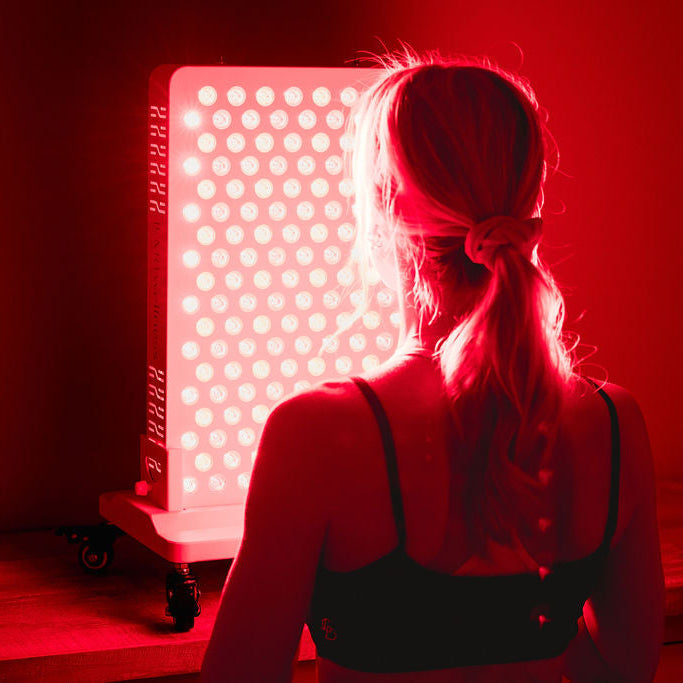
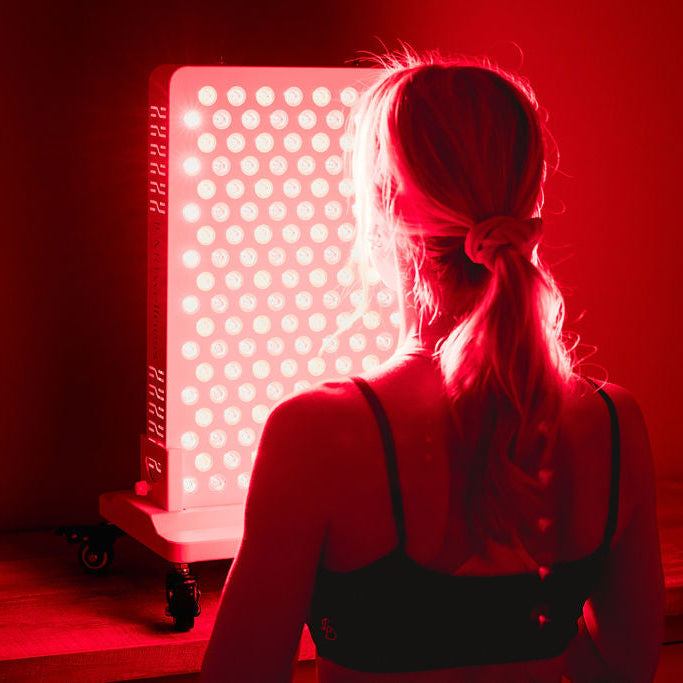
This is exactly the gap our circadian lighting products are designed to sit inside, not to replace real sunlight (nothing does that), but to give your body a cleaner, more consistent signal in the hours when natural light isn't available: warmer, dimmer light in the evening, and a strong, clear light source for the darker mornings before the sun properly comes up. If you're curious how that works alongside the tips above, you can have a look through the LUM8 Wellness range.
For now, the simplest and most effective thing you can do this week costs nothing: step outside not long after you wake up, and let your eyes do the rest.
This article is general education and isn't intended to diagnose, treat, or cure any condition. If sleep issues are persistent or significantly affecting your life, speak with your GP or a qualified health practitioner.